Resort Development
How to Start a Luxury Glamping Resort
Creating a luxury glamping resort is an opportunity to develop a distinctive hospitality experience around nature, design, and a sense of place.
The most successful concepts offer much more than attractive accommodation. They bring together thoughtful site planning, comfortable guest facilities, practical operations, and a clear understanding of the people they hope to attract.
Whether you own a family property, manage an existing campground, or are considering a larger hospitality development, the following steps provide a practical starting point.
1. Understand the Potential of Your Property
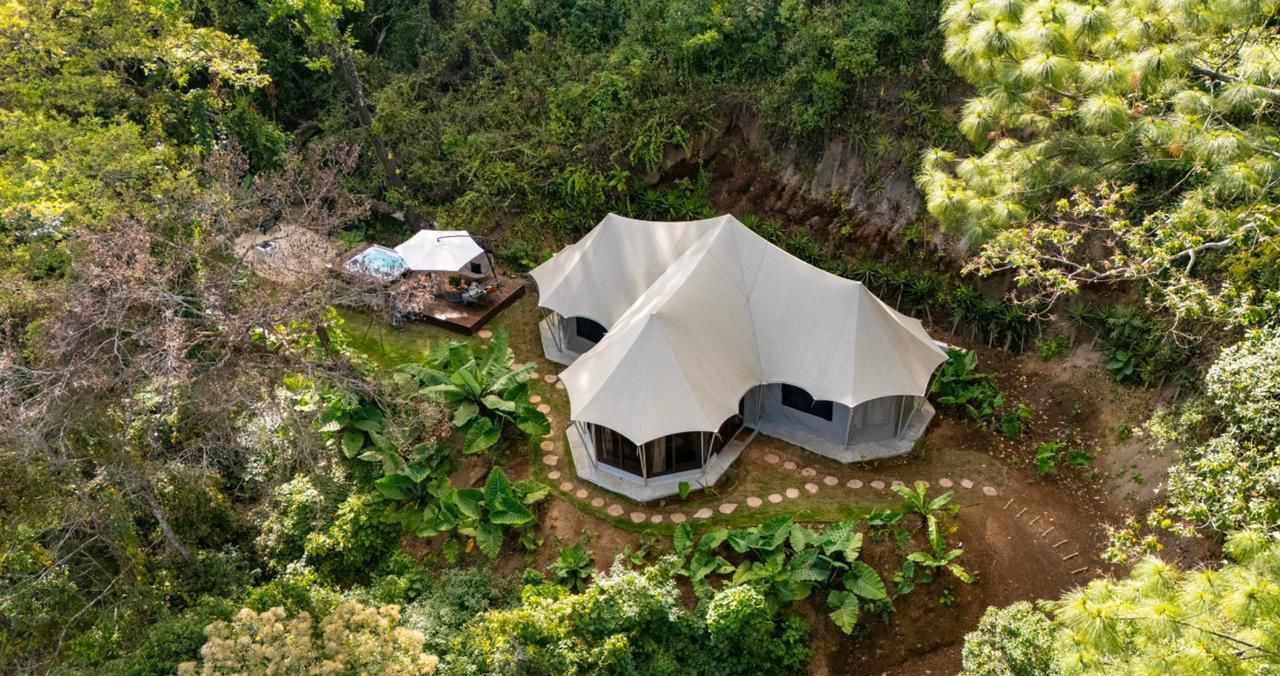
Before selecting tents, evaluate the land itself.
Consider its natural features, climate, access roads, topography, views, vegetation, drainage, and proximity to local attractions.
A beautiful setting may provide a strong foundation for a resort, but it does not automatically mean the property is suitable for overnight accommodation.
Investigate zoning, land-use permissions, building requirements, environmental restrictions, water availability, wastewater management, fire access, and utility connections early.
These requirements vary significantly by location and can influence the feasibility and cost of the entire development.
2. Define the Guest Experience
A couples-focused luxury retreat will have different requirements from a family-oriented glamping resort.
Consider who you want to attract and what they expect from the experience.
Potential concepts include romantic private suites, nature-based wellness retreats, family accommodation, luxury safari-style lodges, and boutique resorts with dining and activity facilities.
Your intended guest profile should guide accommodation sizes, privacy between units, bathroom requirements, outdoor spaces, amenities, and service levels.
3. Choose the Right Accommodation
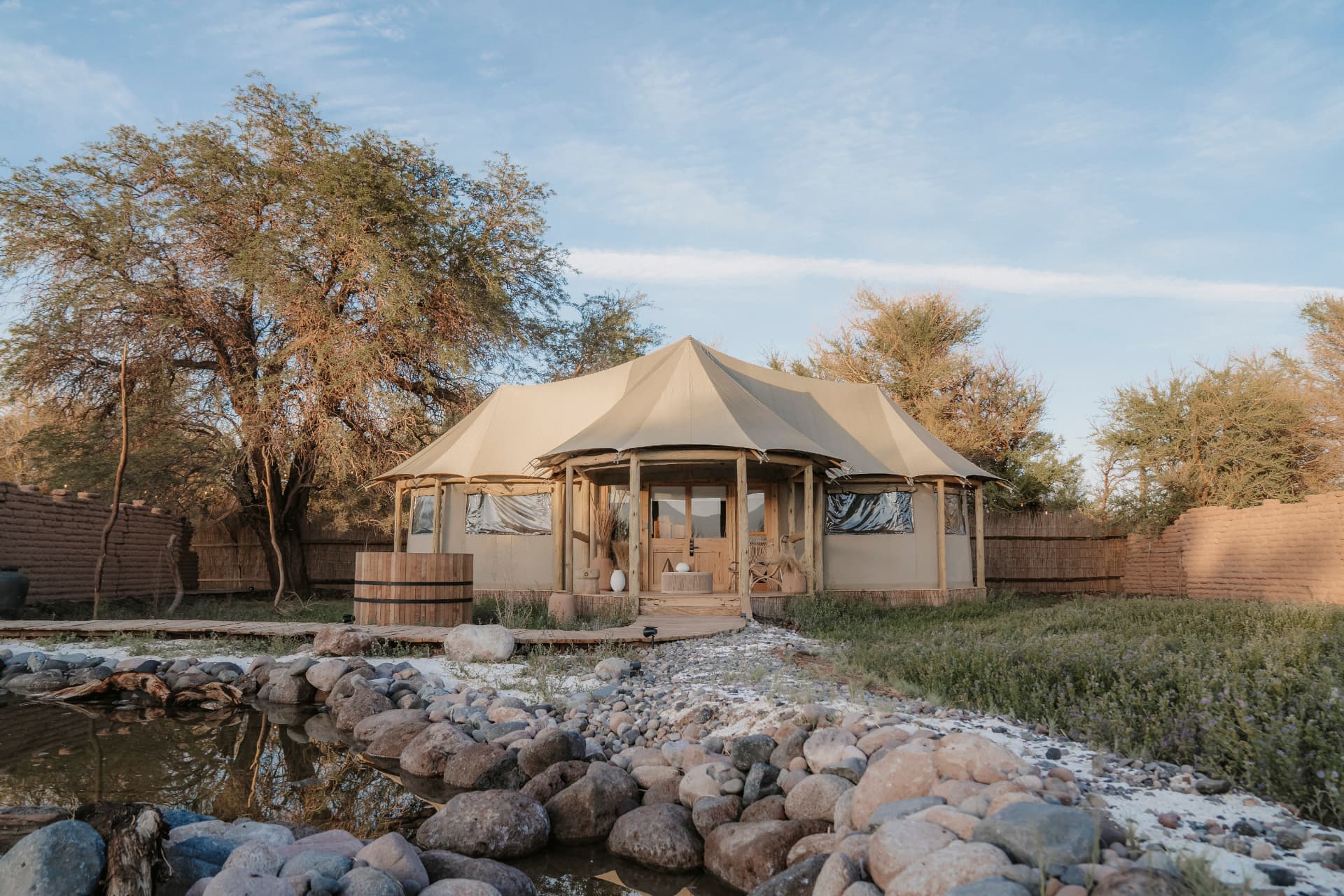
Tent selection should reflect both your target market and the conditions of the property.
Smaller luxury accommodation units can suit intimate guest experiences, while larger structures may provide flexibility for families or premium suites.
Evaluate usable interior space, veranda areas, door and window arrangements, ventilation, insulation options, and the feasibility of adding bathrooms or internal partitions.
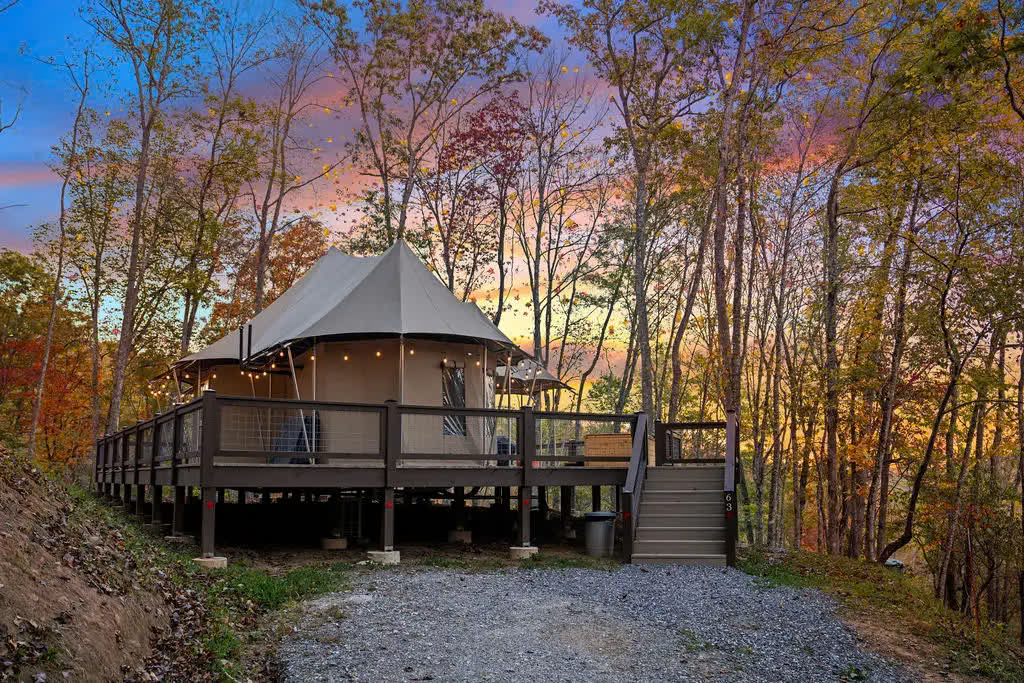
Also consider the relationship between each accommodation structure and its proposed deck or foundation.
Explore the Exclusive Tents collection to compare available architectural concepts.
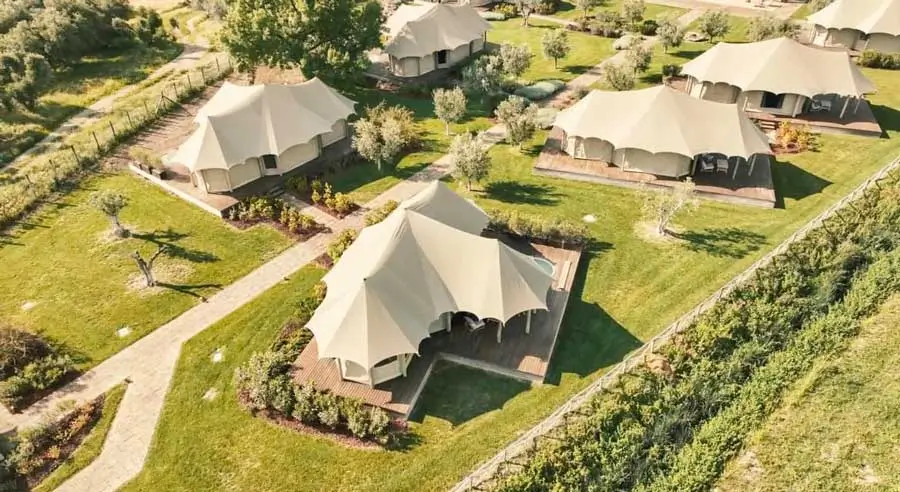
4. Create a Preliminary Site Layout
A site layout should account for more than the number of tents that physically fit on the land.
Plan guest privacy, pathways, service access, views, sun exposure, prevailing winds, landscaping, drainage, and safe emergency access.
Think carefully about where guests will arrive, park, check in, dine, and spend time outside their accommodation.
A smaller number of well-positioned units can sometimes create a more compelling luxury experience than a densely packed arrangement.
5. Establish a Realistic Project Budget
The tent structure is one part of the total investment.
A project budget may also require allowances for land preparation, decks, foundations, utilities, bathrooms, furnishings, landscaping, professional services, permits, freight, import duties, labor, marketing, and working capital.
Request quotations with clear inclusions and exclusions so you understand which costs are associated with the tent manufacturer and which remain the responsibility of your local project team.
6. Develop the Business Model
Study the local hospitality market.
Evaluate competing properties, seasonal demand, achievable nightly rates, occupancy patterns, guest acquisition costs, staffing, and expected operating expenses.
Build conservative, moderate, and optimistic scenarios rather than relying on a single occupancy assumption.
Account for the ramp-up period after opening, when a new resort may still be establishing awareness and reviews.
7. Plan for Long-Term Operations
Consider guest maintenance, housekeeping, laundry, security, weather protection, accessibility, inventory replacement, and ongoing property care.
A successful glamping destination needs reliable daily operations, not just beautiful architecture.
A Balance of Creativity and Practical Planning
Starting a luxury glamping resort is a balance of creativity and practical planning.
The strongest projects begin with a clear understanding of the site, the guest experience, and the operational requirements before finalizing accommodation selections.
Continue Exploring
Have Land and a Vision?
Explore the Exclusive Tents collection and speak with our team about the accommodation options that may suit your property.